
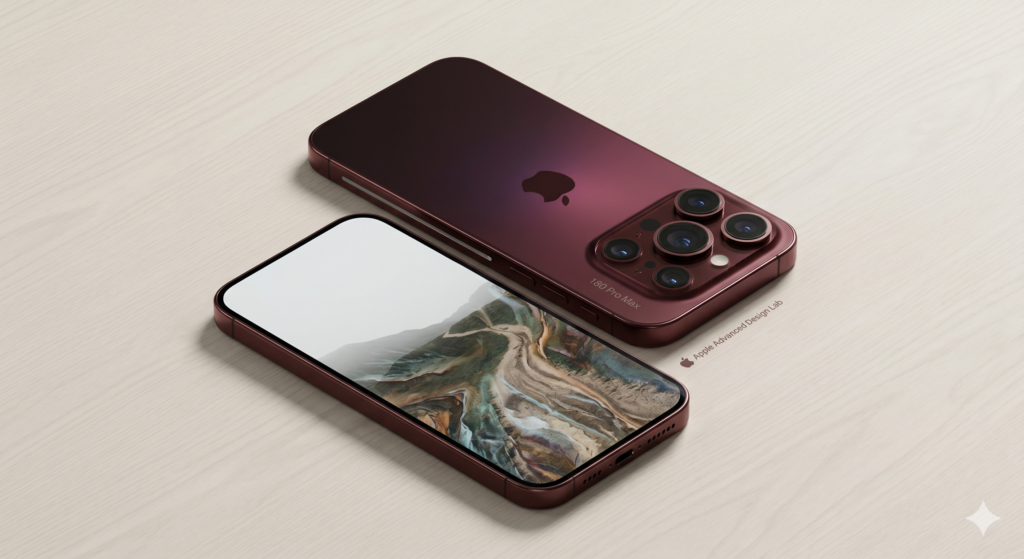
Apple’s iPhone release cycle has followed the same pattern for over a decade. September announcement, September launch, all four models at once. In 2026, that changes. Apple is breaking from its standard schedule, releasing only the high-end models in September — the iPhone 18 Pro, iPhone 18 Pro Max, and the new foldable iPhone — while the standard iPhone 18 will not arrive until spring 2027. That means anyone upgrading in the fall of 2026 will be choosing from Apple’s most expensive iPhones only, with price tags starting at $999 or more. Accio
For digital nomads and remote workers who depend on their iPhone as a primary productivity and connectivity tool, the iPhone 18 Pro and Pro Max represent the most significant upgrade cycle in several years — not because of the usual incremental improvements, but because of three specific changes that matter directly to how people work on the move.
Note: This article is based on leaks and rumours from reliable sources as of May 2026. Nothing has been officially confirmed by Apple.
The A20 Pro Chip: Why 2nm Changes More Than Benchmarks
The iPhone 18 Pro and Pro Max will be the first iPhones to feature Apple’s A20 Pro chip, built on a 2-nanometer manufacturing process, delivering roughly 15% faster performance than the A19. The chip transition from 3nm to 2nm isn’t just a marketing number — it’s a meaningful reduction in transistor size that allows Apple to pack more processing power into the same thermal envelope while consuming less energy. Accio
For nomads, the relevant outcome is twofold. First, on-device AI tasks — real-time translation, photo processing, document summarisation, and Siri requests — run noticeably faster without sending data to a server. The A20 Pro is expected to feature an A20 Pro variant for the Pro models, while the standard iPhone 18 gets the base A20. Second, battery efficiency improves because the chip generates less heat per computation — which means the battery lasts longer under the same workload, directly relevant for long travel days without reliable charging access. TODAY.com
Satellite Internet: The Feature That Changes Remote Work Geography
One of the most significant rumoured upgrades for the iPhone 18 Pro is full satellite internet connectivity — not just emergency SOS messaging, but actual data connectivity via satellite, powered by Apple’s C2 modem and Amazon’s Leo satellite network. The implications for nomads working from genuinely remote locations are significant. If the rumour proves accurate, an iPhone 18 Pro could provide a usable data connection from locations where no cellular infrastructure exists at all — a mountain pass, a remote coastal island, a rural area between carrier coverage zones. Accio
Apple is also planning to allow third-party apps to access the satellite connection, with Apple Maps and Photos reported to work over satellite as well. This isn’t the emergency-only satellite feature that previous iPhones offered — it’s a data layer that could function as a genuine connectivity backup for remote workers who currently rely on local SIM cards and hotspots. TODAY.com
Variable Aperture Camera: A Major Upgrade for Travel Photography
The main 48-megapixel Fusion camera on both iPhone 18 Pro models is rumoured to feature a variable aperture, which would allow users to control the amount of light passing through the camera’s lens and reaching the sensor. This is a feature previously exclusive to dedicated camera systems and a small number of Android flagships. TODAY.com
For nomads who use their iPhone as their primary camera — which covers the majority of digital nomads who travel light — variable aperture means meaningful control over depth of field and low-light performance without carrying additional camera equipment. A wider aperture for low-light street photography in Hanoi. A narrower aperture for sharp landscape shots in Patagonia. Both on the same device that’s already in your pocket.
Design: Smaller Dynamic Island, New Dark Cherry Colour
Apple is reportedly moving some Face ID components under the display on the iPhone 18 Pro models, paving the way for a smaller Dynamic Island. The screen sizes stay the same — 6.3 inches for the Pro and 6.9 inches for the Pro Max — but more of that screen will be usable display rather than sensor cutout. TODAY.comAccio
The signature new colour for the iPhone 18 Pro and Pro Max will reportedly be Dark Cherry — a deep, wine-adjacent red with a purple tint — alongside Light Blue, Dark Gray, and Silver. The Cosmic Orange from the iPhone 17 Pro is expected to be discontinued. For nomads who bought the 17 Pro specifically for that colour, the Dark Cherry option is a worthy successor. techtravelkit
LTPO+ Display: More Battery Life From the Same Panel
The iPhone 18 Pro models are expected to feature LTPO+ display technology, which should allow the display to adjust refresh rates more efficiently, contributing to longer battery life without reducing visual smoothness. For nomads using navigation, reading, or video calls throughout the day, display power draw is one of the largest battery consumers — more efficient display management translates directly into more time between charges. TODAY.com
What This Means for Digital Nomads Deciding Whether to Upgrade
The honest assessment: the iPhone 18 Pro is worth serious consideration if you’re currently running an iPhone 15 Pro or older. The A20 Pro chip, satellite connectivity, and variable aperture camera represent genuine capability upgrades rather than incremental refinements. If you’re on a 16 Pro or 17 Pro, the decision is closer — satellite internet is compelling for remote workers, but the rest of the upgrade is evolutionary.
Apple is expected to announce the iPhone 18 Pro and Pro Max in September 2026, with pre-orders and availability following shortly after — likely shipping within the same month. No pricing has been confirmed, but price stability at current Pro levels is expected for base configurations. techtravelkit
For nomads building or upgrading their full tech setup before a long trip, pairing a new iPhone with the right supporting gear makes the entire mobile workflow more capable. A reliable GaN charger keeps your iPhone topped up alongside your laptop from a single outlet. A solid power bank covers the long travel days when outlets aren’t available. And if you’re working from the road and treating your iPhone as a serious productivity tool, the ultimate digital nomad gear guide covers the full stack that makes that workflow reliable across time zones and countries.
Pingback: WWDC 2026 Is 4 Weeks Away. Here's Every iOS 27 Feature
Very useful guide. Choosing the right car audio speakers makes a huge difference in sound quality.
What’s Going down i am new to this, I stumbled upon this I’ve discovered It positively useful and it has aided me out loads. I’m hoping to contribute & help different users like its helped me. Great job.